
EV charger maintenance starts with protecting the cable, connector and enclosure, following the manufacturer’s instructions and acting promptly on faults. Keep electrical covers closed and leave internal inspection or testing to a competent specialist. A charger that still powers the car can need attention if damage, overheating or recurring tripping appears.
EV charger maintenance starts with the manual
Find the model number, installation certificate and warranty terms. Tethered chargers have a permanently attached lead; socketed units rely on a separate cable too. Exposed and sheltered installations face different conditions, so use the instructions for the equipment actually installed.
Do not assume every manufacturer requires annual servicing. Some describe units as maintenance-free while still requiring users to stop using damaged equipment. Ask which inspections and protective-device checks apply to your model and supply. Keep the advice with the manual for anyone managing the charger later.
Check visible parts before connecting
Look for cuts, crushed sections and unusual cable wear. Inspect the connector for visible damage, contamination and discolouration without touching contacts or inserting tools. A casing pulled away from the wall or a loose cable entry needs professional attention.
Store the lead without tight bends and keep it out of wheel paths. Avoid leaving the connector in puddles or grit. Stop use if there are scorch marks, exposed conductors, a persistent burning smell or water ingress. In a fire or immediate danger, move away and contact emergency services rather than trying to rescue the charger.

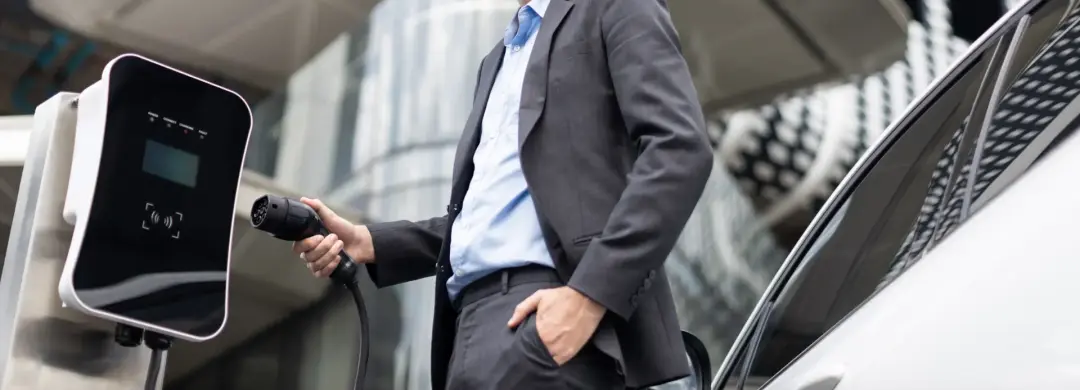
Illustrative image from the existing site library; wall-mounted EV charger beside a residential entrance.
Clean gently without disturbing seals
Disconnect the vehicle and follow the cleaning instructions. For example, Ohme’s published Home and Go manual permits a soft damp cloth and advises against cleaning agents and solvents. That is product-specific guidance; check your own manual before applying it to another charger.
Do not pressure-wash a wallbox, spray into the socket or remove seals to dry it out. Outdoor protection depends on correct mounting and intact components. Keep vegetation clear and avoid storing bins against the cable. A canopy should preserve access, ventilation and the required installation clearances.
Separate settings problems from electrical faults
Delayed charging can result from the car’s timer, the charger’s schedule, a smart tariff or a communication interruption. Check app and vehicle settings and record the exact message and time. An offline app does not, by itself, establish a damaged charging circuit.
Repeated tripping, heat damage or a connector that no longer fits needs competent assessment. Do not continually reset protection, bypass devices or open the charger. Give the specialist the history, including recent vehicle, tariff and software changes, to help distinguish electrical faults from configuration issues.
Keep software and maintenance records organised
Use supported updates and retain access to the account associated with the charger. Review schedules after changing tariffs or vehicles and check the next session behaves as intended. Record repairs, replacement cables and installer changes.
DfT’s latest quarterly release available for this guide counted 121,171 public EV chargers in the UK on 1 July 2026, including 28,887 rated at least 50kW. These public-network figures are not home-charger reliability statistics. Alternative locations may help during repairs, while routine care of your own equipment reduces avoidable disruption.
Sources and further reading
Guidance checked on 22 October 2026. Data periods are stated in the text; illustrative calculations are not survey findings.
Summary
Follow the charger’s manual, protect its cable and stop using it when electrical warning signs appear. If you are considering replacement equipment or a new charging position, explore the installation service below.


