Electrical appliances do not all need PAT testing once a year. The appropriate interval depends on the equipment, its environment, handling and previous faults. A useful programme combines everyday checks, formal visual inspections and appropriate instrument tests, with earlier attention whenever damage or a change of use increases the risk.
PAT testing intervals start with equipment risk
A cleaning machine dragged between rooms receives different treatment from a monitor on a dry office desk. Consider movement, moisture, heat, public access and whether users are likely to notice damage. The consequences of a fault matter too.
HSE confirms that the Electricity at Work Regulations do not prescribe annual PAT testing. Manufacturer instructions and sector-specific or contractual requirements can still affect the programme. Record why an interval was selected so someone reviewing the register can understand why two similar appliances have different dates.
Read related articles:
A Landlord’s Guide to PAT Testing
Who Can Carry Out PAT Testing?
Signs Your Fusebox May Need Replacing
Use HSE guidance as a starting point
HSE’s currently available low-risk guidance suggests initial combined inspection and testing every one to two years for earthed kettles, irons and some kitchen equipment and floor cleaners. Suitable desktop computers and screens have suggested visual inspections every two to four years, with testing up to five years where not double insulated.
These are guidance intervals, not new survey statistics or legal deadlines. Do not transfer office guidance to a damp workshop or building site. A damaged appliance needs attention immediately, even if its category would normally support a long interval.
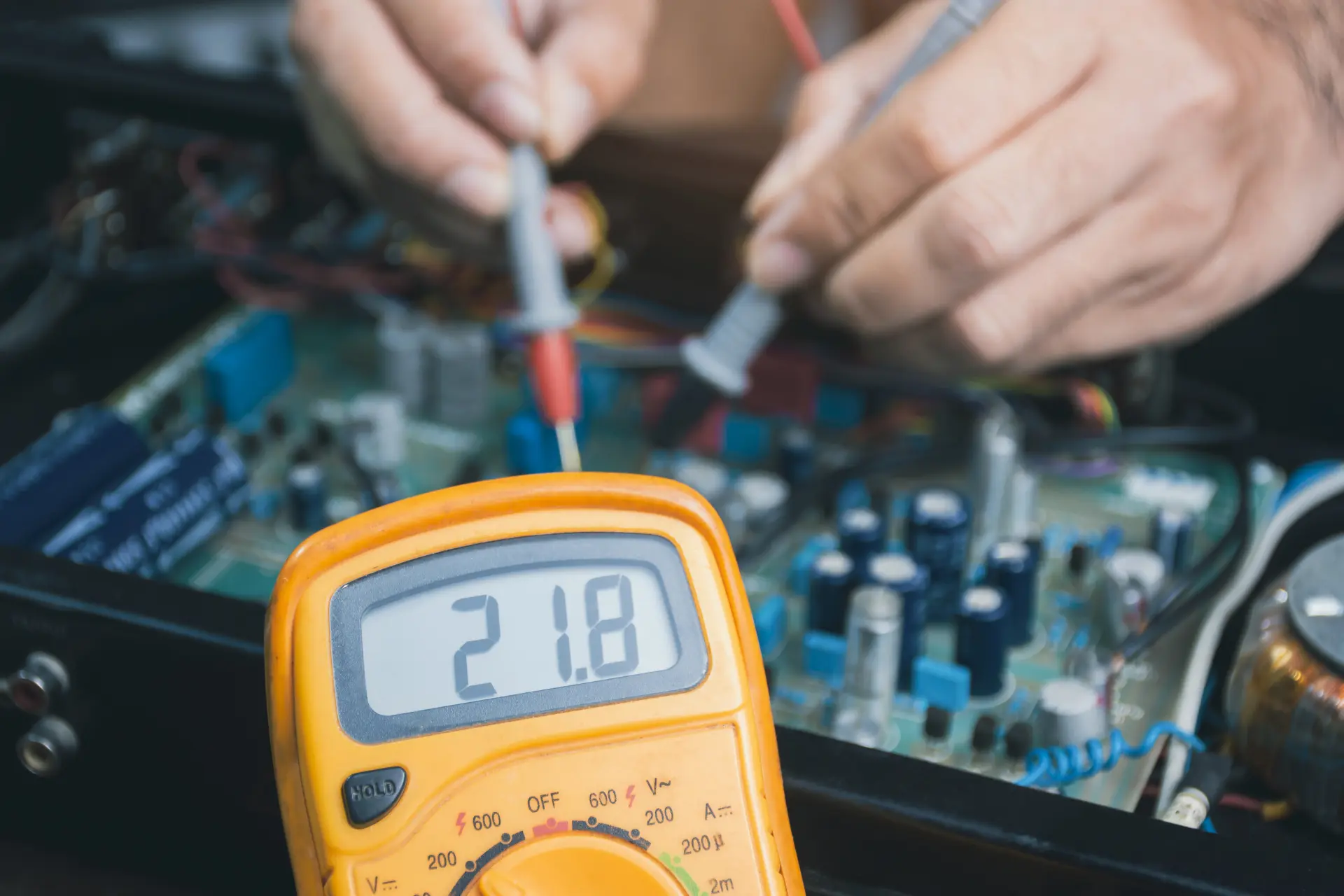
Illustrative image from the existing site library; meter probes applied to an electronic circuit board.
Separate visual checks from electrical tests
A user can notice a split lead, cracked casing or overheated plug before switching on. Formal inspection is more systematic and requires appropriate knowledge. Instrument testing assesses relevant electrical characteristics using methods selected for the equipment.
Give these activities separate entries in the plan. Equipment tested last month can still become dangerous today. Staff should know whom to tell and how to prevent accidental reuse of faulty items. A scheduled date is a management tool, not permission to continue using damaged equipment.
Review the schedule after a change
Reassess equipment that moves location, is repaired, suffers impact or becomes heavily used. A desk fan moved into a dusty work area may no longer fit its original assessment. Water exposure or a burning smell calls for stopping use and competent assessment.
HSE says new equipment should normally arrive safe and generally does not need an initial PAT test, although checking for delivery damage is sensible. Second-hand equipment with an uncertain history deserves a separate decision. An old label cannot establish what happened in storage or transport.
Use findings to prevent repeat defects
Group faults by appliance type and location. Repeated damaged leads on mobile machines may indicate poor handling or storage as well as a need for shorter checks. Consistently satisfactory results may support longer intervals where the assessment permits.
For illustration, four defects among 80 inspected items would be an observed defect rate of 5%. This is a worked calculation, not an industry statistic. Investigate where those faults occurred before changing every appliance’s schedule. The aim is to prevent damage, not simply repeat the same tests each year.
Why seasonal equipment merits attention
Electrical Safety First’s analysis recorded 31 accidental electric-blanket fires in England in 2024/25, compared with 25 the previous year: a 24% increase. This is a specific product category, not a PAT failure rate.
Equipment brought out after storage deserves a fresh condition check, even when its routine test date has not arrived. Follow the product’s instructions and arrange specialist assessment where its construction or condition calls for it.
Sources and further reading
Guidance checked on 22 October 2026. Data periods are stated in the text; illustrative calculations are not survey findings.
Summary
Set inspection and testing dates by risk, then review them against real findings. If your schedule treats every appliance alike, the service below can help you establish a practical programme.